
Si24r1: The Cost-Effective 2.4GHz Wireless Transceiver for IoT and Remote Control
In the rapidly growing world of wireless communication, the si24r1 chip emerges as a high-performance, ultra-low-power solution for 2.4 GHz applications. Designed as a compatible alternative to popular transceivers like the NRF24L01, the si24r1 offers excellent value for makers, engineers, and manufacturers building IoT devices, remote controls, and sensor networks. This guide explores the si24r1 features, advantages, and applications to help you optimize your next project.
What is the Si24r1 Chip?
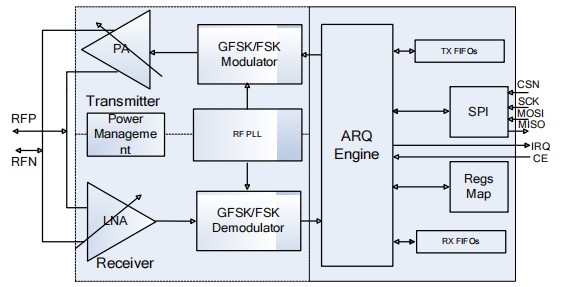
The si24r1 is a single-chip 2.4 GHz GFSK/FSK transceiver from Action Dynamic, fully compatible with protocols like those in the NRF24L01. It integrates an ARQ engine, high PSRR LDO, and minimal external components for easy integration. With QFN20 or COB packaging, the si24r1 supports data rates up to 2 Mbps, making it ideal for low-power, long-range wireless systems.
From the Si24R1 datasheet, it's engineered for ISM band operation with robust features like auto retransmit (ART) and dynamic payload length (DPL), ensuring reliable data transfer.
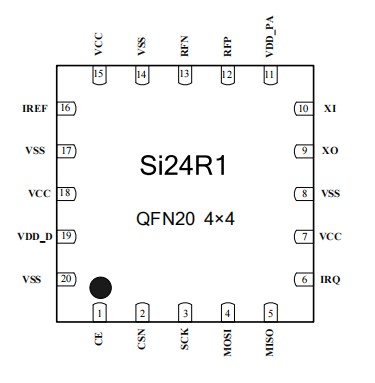
Key Features of Si24r1
2.4 GHz ISM band, GFSK/FSK modulation
Data rates: 2 Mbps / 1 Mbps / 250 kbps
Sensitivity: -83 dBm @ 2 Mbps
TX power up to +7 dBm
Ultra-low power: 1 µA shutdown, 15 µA standby
Startup time ≤130 µs
10 MHz 4-wire SPI interface
Integrated smart ARQ protocol engine
1-bit RSSI output
Wide voltage: 1.9–3.6 V (digital I/O 1.9–5.25 V)
Low-cost 16 MHz ±60 ppm crystal
QFN20 package, minimal BOM
These specs make the si24r1 a drop-in upgrade for NRF24L01 projects, with similar pinouts and protocol support.
Advantages of Using Si24r1
Cost-Effective Alternative: As a domestic chip, the si24r1 offers NRF24L01 compatibility at lower prices without compromising performance.
Ultra-Low Power Design: Perfect for battery-powered devices like wireless sensors (15 mA RX/TX @ 2 Mbps).
Reliable Communication: Built-in ARQ, CRC, and PID ensure error-free data in noisy environments.
Easy Integration: 4-wire SPI, wide voltage tolerance, and internal LDO reduce design complexity.
Versatile Applications: From active RFID to smart home, the si24r1 excels in low-data-rate scenarios.
Compared to NRF24L01 (from its datasheet), the si24r1 matches key metrics like low power (1 µA shutdown vs 0.9 µA) and adds features like wider I/O voltage.
Popular Applications for Si24r1
Wireless mouse/keyboards (low latency 2 Mbps mode)
Remote controls & motion devices
Active RFID systems
Smart grid/home automation
Wireless audio modules
Data transmission & sensor networks
The si24r1's ARQ engine handles auto-retry and ACK, simplifying code for multi-pipe communication.
How to Get Started with Si24r1
Hardware: Connect via SPI (MOSI, MISO, SCK, CSN) + CE/IRQ pins. Use 3.3 V logic.
Software: Compatible with NRF24L01 libraries (e.g., RF24 for Arduino).
Configuration: Set RF_CH (0–125), data rate, and power level.
Tips: Enable DPL for dynamic packets; use CRC for reliability.
For detailed specs, refer to the Si24R1 datasheet — it's a game-changer for cost-sensitive wireless designs.
Conclusion
The si24r1 delivers high-performance 2.4 GHz wireless at a fraction of the cost, making it the go-to choice for IoT innovators. With NRF24L01 compatibility and superior features, upgrade your projects today.
Keywords: si24r1, si24r1 chip, 2.4GHz transceiver, si24r1 datasheet, wireless module



.png)

.png)